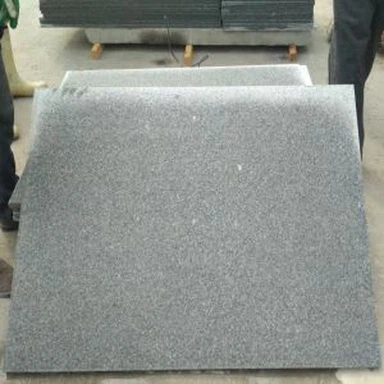


Reasons for fading of marble granite
Feb 05, 2020
We often say that granite "will never fade". But in the long run, granite stone will fade, it's just time. Special building surfaces, squares, etc. are also affected by exposure to wind and sun. For example, red granite will fade after 10 days and a half months of sun exposure.
The minerals in granite are mainly composed of feldspar, quartz, mica, pyroxene, and amphibole. In the main silicate mineral structures, each silicon ion is surrounded by four oxygen ions, forming a silicon-oxygen tetrahedron. This basic structural unit is quite stable in nature, strong in resistance to acids and alkalis, difficult to dissolve, resistant to weathering, and good in discoloration.
The discoloration of granite also varies with the type of stone. Generally speaking, darker and lighter granite is easy to fade, because the mineral composition of dark (e.g. black, dark green) granite is mainly pyroxene, amphibole, basic plagioclase, magnetite Wait. Light-colored granite is mainly acid plagioclase, potash feldspar, biotite, and quartz. Minerals generally form underground, with some minerals forming first and others later.
The ones that are formed first tend to be heavy elements with a heavier atomic weight, deeper locations, less oxygen supply, and greater pressure; the opposite are formed later. Therefore, different minerals generally have different formation periods, and their order is roughly: dark minerals: olivine-pyroxene-hornblende-biotite; light-colored minerals: basic plagioclase-acid plagioclase-potassium Stone-quartz. After the minerals formed first are exposed to the surface, due to the large changes in the environment, secondary changes are easy to occur, and the later formed ones have less changes. The most stable is quartz.
Another situation is that secondary minerals are more fading than primary minerals, such as green and grass-green decorative boards with chlorite as the main component. After 5 to 10 years, the color has also faded, but it is similar to marble. By contrast, this change is still very weak. The color change (fading) is also related to the environment. If the acid and alkali content in the air of the industrial area is high, it will easily change and fade. The degree of maintenance is also important.
Marble is mainly composed of calcite, dolomite and other minerals. The molecular formula of calcite is CaCO3, and dolomite is CaMg [CO3] 2. Both have carbonate [CO3] ions. It is relatively active and easily interacts with sulfur dioxide in the air to form gypsum (Ca [SO4] .2H2O). Particulate. Calcite easily interacts with water to form calcium bicarbonate (Ca [HCO3] 2), which is dissolved in water, and then turns into calcium carbonate when water is lost. After these changes, the original crystal polished surface of the marble polished plate no longer exists. Therefore, it is not suitable to use marble for exterior wall decoration, especially for outdoor decoration materials. As the marble of the exterior wall, the color will generally change after 2 to 3 years.