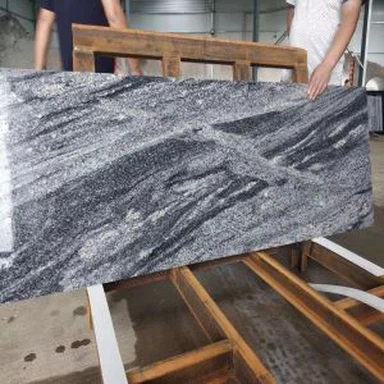


What Color Is Natural Marble?
Dec 28, 2020
While homeowners usually think countertops and granite are one and the same, we often forget the very beautiful natural stone that we know as marble. Known for its use in sculpture and architectural details, marble has a purity that differs from all other natural stones.
Natural marble is formed by geographical activity, which is subject to immense heat and pressure, while artificial marble lacks this heat resistance. When marble is formed, other minerals penetrate the limestone mass, giving it different colours and textures. Last but not least, travertine marble, which often has plant imprints and porous formations due to the many vacuoles typical of the stone, is the result of a process that contributes to its porous nature.
It is difficult to say whether you are looking at real marble, artificial marble or granite, but most likely you will want to know what it looks like to be a human being - made. If marble makes it onto the shortlist, you have to know whether it is the natural marble you are looking for, or what is the human being? Green marble is marble because it is green and is used to imitate marble. However, when it pearls, it can also be colored in various ways, such as green, blue, red, orange, yellow, green and green.
Often referred to as green marble, serpentine marble looks very similar, but is more stain and spill resistant than marble and is actually not marble at all (although there is a difference). Marble is used in many families and for many different purposes, whether in natural marble or man-made stone. Natural products are mixed with other ingredients such as cement to create artificial marble products that can be easily matched in color. These colours are added artificially and often do not have the natural lustre with which natural marble shines, but they are still marble.
Tennessee marble, for example, is really pink ordovician or what geologists call the Holston Formation. The stone dust used by the manufacturers is not always natural marble, but rather different combinations, including onyx, granite and limestone.
This suggests that the stone is embedded with humans - stone, not natural marble, which is combined with other materials such as cement to create false marble.
This type of marble attracts a lot of attention, which results in a unique and attractive marble that can be combined with other marble materials. By simply presenting the difference between artificial and natural marble, we hope to help you. If you really want a marble look for your field but can't find a good deal, think about this stone before you settle for artificial marble. Do you know anything about green marble and if so, what do you think about it?
Marble is extracted from limestone or dolomite and is a granular, metamorphic rock consisting of interlocking grains. It is embedded in the rock by a combination of mineral and mineralogical processes such as erosion, surface erosion and the formation of pores and pores.
CaCO 3, standard marble of calcite and dolomite marble, have little or no magnesium (CaMg CO 3).
The famous Colosseum used a famous marble of calcite and dolomite, of which there are many examples in Italy, also known as the White Carrara. The other Italian luxury marble is CaCO 3, which is found in Milan Cathedral. Another example is Bebe, an example of white marble from the Italian capital Rome.
Be marble is a bright white color that makes it a natural stone, but natural marble will show its impurities. Natural stone comes in a variety of colors, the coloring of the marble can vary from pristine white to black. There are also a variety of colours of stripes, veins and patterns, with dark brown and black veins making up the bulk of Bebe marble and CaCO-3 marble, as well as many other natural stones.
Carrara marble, however, is usually white or grey with bluish undertones, and the veins are less defined but still visible. Acid etching is much more noticeable in natural marble and leaves whitish traces on the surface of the stone and also on its surface as white marble.
For more colour and warmth on marble floors, we use the Breccia marble, which is available in a range of deep shades, including white, blue, green, red, yellow, orange and even black. Calacata marble of this type is embedded with muscovite and chlorite, a rich carbonate matrix arranged in the form of green - yellow - ochre - musmovite.
Most green marbles have serpentine as a mineral, which protects the marble from the mineral deficiency that other pure calcite-based marbles have. Although marble is mainly made of calcite, it is possible that the original limestone occasionally had sand or stratifications, whereas the Kerts are sea rocks made of pure quartz.