

Precautions for stone slitting
Aug 14, 2020
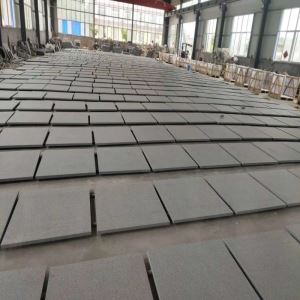
Stone slitting is mainly to remove cement slag, sand, dust and other dirt in the joints to make room for filling in fillers. At the same time, the stone is constantly transported before paving. The edges and corners are particularly easy to stain, especially the light-colored stone. If it is not removed when cutting the seam, a "black line" will be formed after the glue is ground. The width and narrow error of the original slit can be adjusted by slitting, because after the blade thickness of the same size is cut, it can basically reach the same width when viewed on a large area, and it can also avoid some slits that are too narrow to make up for the glue.
The slitting tool is mainly a 110mm cutting machine, equipped with diamond electroplated slices or sintered slices with an outer diameter of 110mm and a thickness of 0.4mm~1.1mm, adjust the cutting depth, and pull and cut along the seam. Cutting the seam seems simple, but it is the most irritable. Impatient will often cause the thread to cross, cut to another board that is not to be cut, or run the thread. Going out of the line caused the board to lose its phase and collapse its edges. If the slit is not stretched straight, it will often cause the width to increase. In addition to the poor grasp of the technique, it is related to the film being too thin and fluttering.
The maximum slit width should not exceed 2mm, and the depth should be 5mm. When cutting the stone, the friction between the slice and the stone will generate high temperature, which is easy to cause the stone crystals to collapse. At this time, water should be added for cooling. In order to avoid adding water into the stone joints and causing water spots and other diseases, water-based curing agents can be used for cooling, even if it penetrates There will be no harm in the cracks.