

The Contradiction Between The Quality Standards Of Domestic And Foreign Products
Jul 28, 2020
1. Intrinsic quality
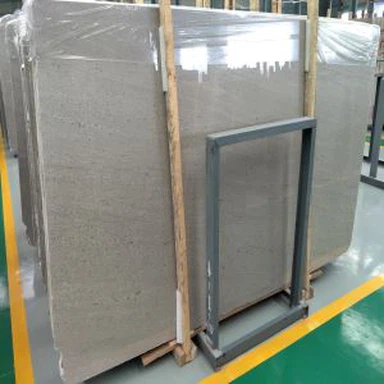
The inherent quality of natural granite and marble cannot be perfect. Generally, there are some defects, such as color difference and lines. Mottled spots, etc., which need to be dealt with artificially. For varieties with large color differences, strict classification must be performed. In foreign stone processing factories, each process from block to finished product must be classified according to the difference in color, and then can be shipped and shipped to ensure that the color of each batch of products is basically stable and uniform. This is the most important thing for foreign users to stone products. basic requirements. Italy pays special attention to this aspect. A large piece (tens of squares) is basically a color difference, and the block is checked first, and if there is a color difference, it should be explained on the grill box. The United States has stricter requirements for color difference. Generally, one color difference is one for each project. The color in each container must be marked, and two color differences must be noted. People are most sensitive to the quality of the polished board, because it is impossible for the natural stone to have no color difference. Therefore, the current fired board and matt board can be closer to nature and reduce the aversion caused by the color difference. Coupled with the expensive labor in developed countries, manual selection will inevitably increase expenditure. In addition, the purchase of plates is limited and there is not much choice, so the issue of color difference is paid special attention. Our processing plant is not doing enough in this regard, which greatly affects the reputation of the product.
2. Processing quality
Foreign countries have very high requirements on the processing quality of stone. The general measurement indicators for the quality of plate processing are smooth sawing surface, good flatness of the plate surface, small dimensional error (foreign countries generally require within plus or minus 0.5MM), good polish (generally more than 95 degrees), all corners are right angles, The corners are not damaged, and the chamfer is smooth and flat. These are the basic quality requirements for stone processing in the international market. But our processing plant, even if it is specially required, often cannot do it. The common phenomenon is that the processing is rough, the polishing is poor, the size error is 2-3mm, and the thickness is uneven. In the face of this situation, the factory lacks effective supervision and management of product quality and delving into improvement measures. It is difficult to satisfy customers. In today's competitive international stone market, where our export products want to gain a foothold, low prices are far from enough. The more important thing is the quality of the products, and development with quality requirements is the most important. Therefore, quality management must be strengthened and aligned with international standards.
Three, business ideas and business methods our country's stone export is not a commodity under planned listing and license management, and there is no unified coordination and management. Any unit with import and export rights can operate, and it is bound to form a situation of multiple exports, competing for customers with each other, and competing for sales at low prices. This will do more harm than good to the leading products, especially the export of raw materials and rough-processed products. The result is that they cannot be consistent with the outside world, cannot increase the export price, and ensure the reputation and market of the product. The ultimate damage is our own, and the foreign businessmen will Sit back and harvest. What's more serious is that it causes market chaos. Foreign businessmen can't figure out which company they should sign with, so that the supply and quality can be guaranteed. Because not all export-oriented units can grasp the quality well, the customers hesitate not to order. Moreover, the prices quoted by the same products are not the same, or even very different. Waigao took advantage of our weakness to lower prices. For example, Guangxi Cenxi Red, Guangxi Minmetals Corporation sold to Japan at a price of more than US$50/M2, while some quoted prices were less than US$10, and the average price is only 70% of the original price. There are not many orders, and this is the result of long-term exports and competition without unified and coordinated management. This practice is not available abroad, and many foreign businessmen find it incomprehensible.Japan is a capitalist country. It also uses the Stone Chamber of Commerce to coordinate the prices of imported products to protect its own interests. But we are unable to achieve this. The phenomenon of competing for products, markets and customers still occurs. This is obviously harmful and unprofitable for protecting superior products, stabilizing the market and fighting for good prices.
4. The contradiction between the quality standards of domestic and foreign products
The domestic market and users have low requirements for the quality of stone products, which has also played a considerable role in improving the quality of export products. As mentioned earlier, stone manufacturers pay more attention to the domestic market. As the overall domestic technology level is still far behind the developed countries in the world, the quality requirements and decoration level of stone products are also low, which cannot be in line with international standards. The stone market is not small, and the consumption is increasing. For good varieties, as long as the price is cheap, users do not pay much attention to the processing quality. Coupled with unhealthy trends such as promoting products and engaging in buckles, the factory does not pay much attention to improving processing quality, is satisfied with the status quo, and does not actively compete in foreign markets. This is also an important reason why our product quality cannot be improved and it is difficult to meet the requirements of foreign markets.
5. Lack of corresponding sales activities
Information is not smooth, foreign trade methods are not flexible enough, and there is a lack of research on the international stone market. Therefore, they cannot provide cheap and good products according to their needs. The prices of stone materials sold abroad in my country are generally low, but due to lack of research, sometimes the quotations are also high. For example, Sichuan Red offers 80 US dollars/M2 in the United States and Finhol 60 US dollars/M2. Some are unreasonable, making it difficult for foreign investors to accept. There are not many people who raise their stomachs or participate in trade fairs at home and abroad to promote products, which are even worse than those from Italy. They are not used to introducing information and publishing products in foreign professional magazines, and establish contacts with relevant information institutions and stone organizations. Not enough. There are still very few overseas offices or commissioned agents, which affect the ability of my country's stone materials to participate in international competition.